Halloween Wine Pairings: What Pairs Well With Terror?

Sources and publication dates ↓
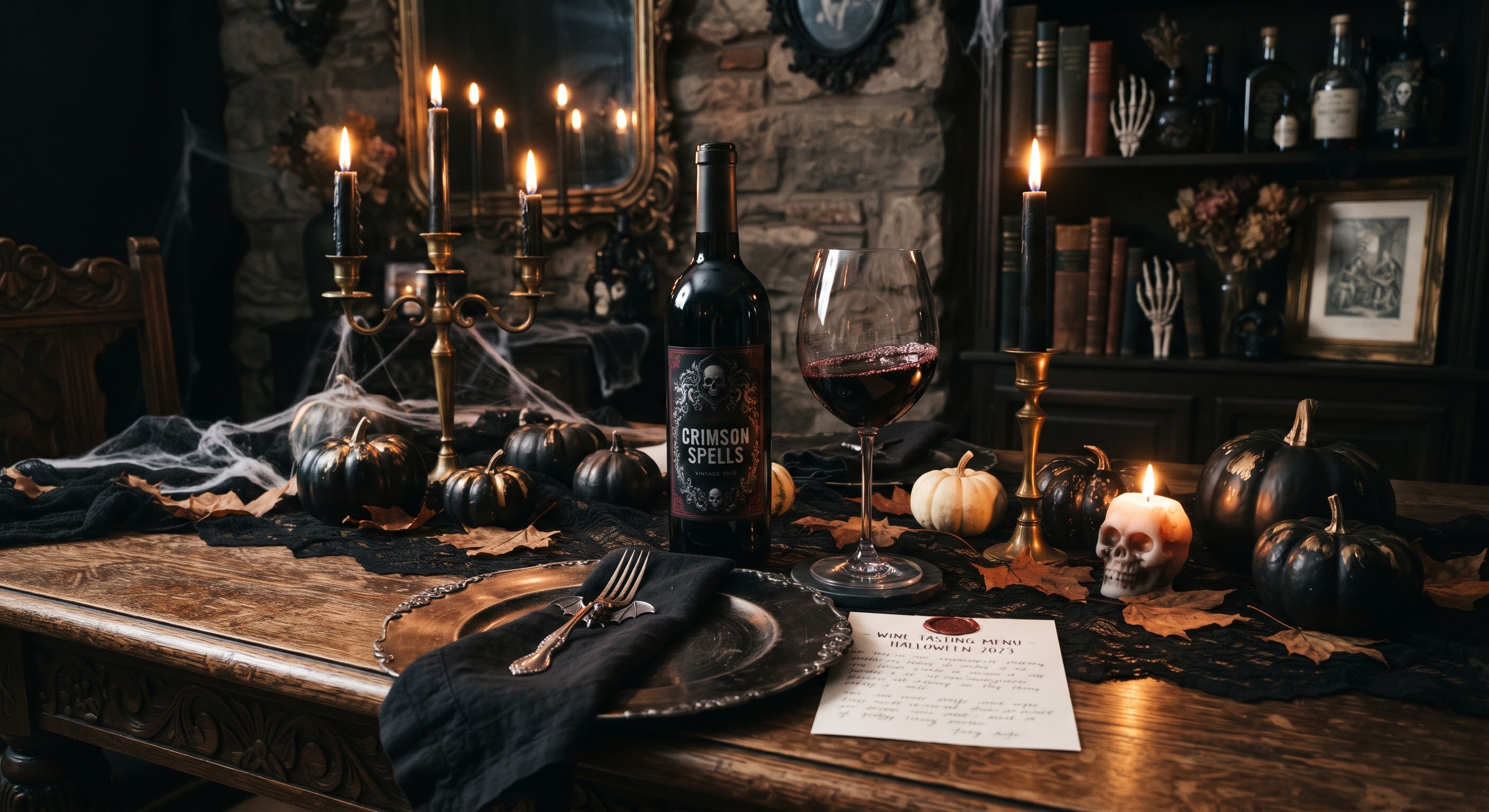
Halloween wine pairings can begin with the colors of the evening: pumpkin-orange wine, a red so dark it looks almost black, and something sweet for the candy bowl. Then let the food decide what goes in each glass.
Nero d’Avola sounds at home on the table. Zinfandel becomes “SINfandel” on a tasting card. A bottle called Blood of Judas hardly needs a costume. There is plenty of fun to be had here, along with some real wine history and useful lessons in pairing.
Blood-red wines for Halloween party food
For a dramatic pour, start with a young, concentrated Saperavi, Petite Sirah, Syrah/Shiraz or Malbec. Tannat and Mourvèdre are other styles to explore. Cabernet Sauvignon and Zinfandel can supply a dark-ruby look, although their depth of color varies considerably from bottle to bottle. Malbec’s intense color and Tannat’s dark color are characteristic features described by their national wine bodies.[23][24]
A dark room adds to the effect, but grape name, youth and full body cannot guarantee opacity or a particular shade. Extraction, blending, age, lighting and the depth of wine in the glass all influence what you see. Choose a specific bottle for its color rather than promising that every example will pour purple-black.
For a nearly inky option, Saperavi is especially interesting. Georgia’s National Wine Agency describes the wines as often fully opaque. Saperavi belongs to the teinturier group, whose pigment occurs in the flesh as well as the skin. Alicante Bouschet is another example; research has documented color development in both its flesh and skin.[16][17]
My savory-party-food suggestions are Malbec with beef sliders, Syrah with sausages, Zinfandel with smoky barbecue, and Nero d’Avola with pizza, antipasti or a hearty meat sauce. Wines of Sicily specifically recommends Nero d’Avola with grilled meats and ragù.[20] Keep the level of chili heat in mind before choosing a powerful, high-alcohol red.
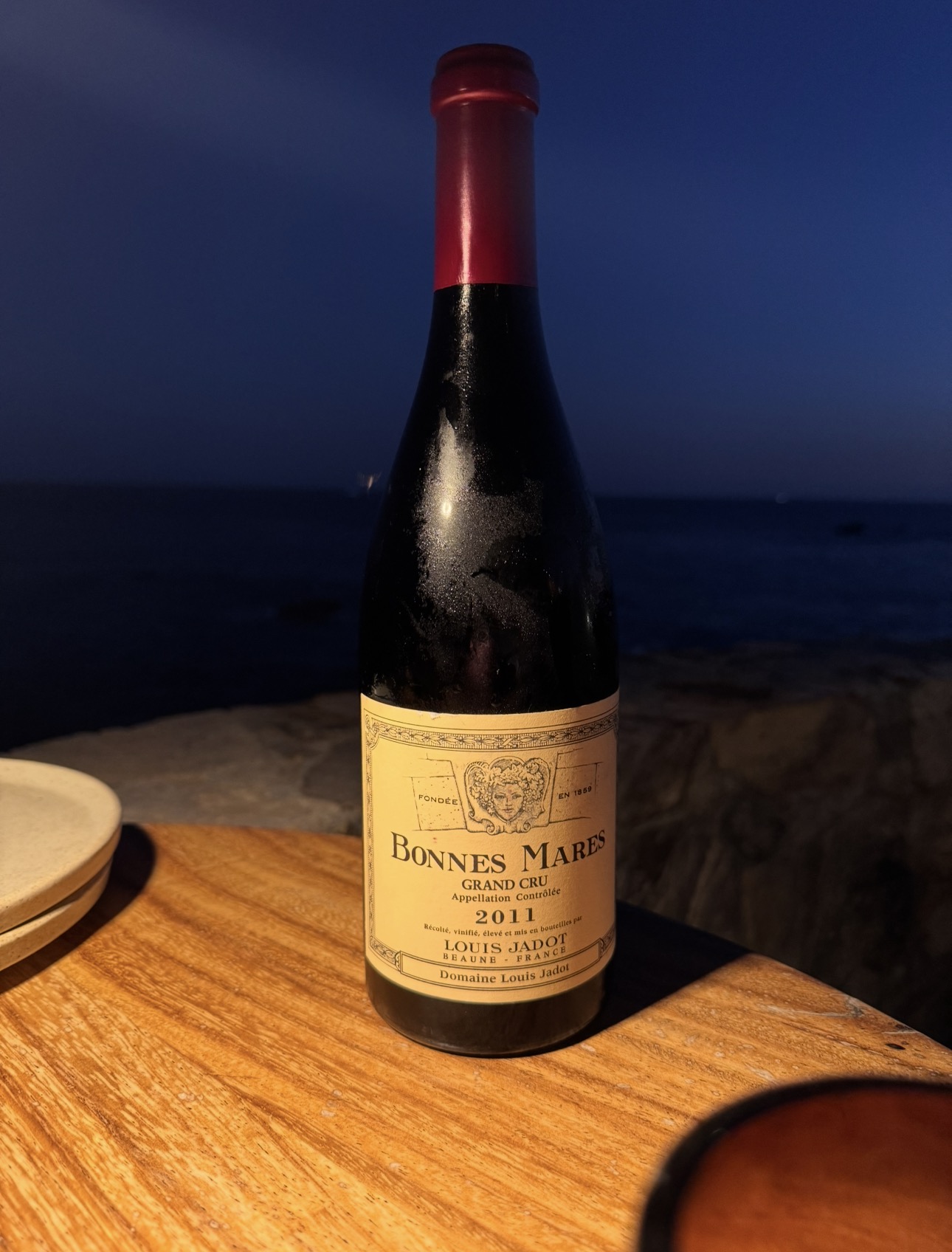
Nero d’Avola, “SINfandel” and wines with blood in the name
Nero d’Avola: the name gives us the dark theme honestly. “Nero” refers to the dark berries, and Avola is the Sicilian place name behind the variety. Put the bottle beside the savory food and let its name do some of the decorating.[18]
“SINfandel”: an easy Halloween name for a Zinfandel tasting card. The pun also appears in the real world: Greenhouse Winery lists a wine called Sinfandel.[19] It is a name, not a separate grape variety or a promise of sweetness.
Sangue di Giuda, “Blood of Judas”: look for a sweet, gently sparkling frizzante example from Italy’s Oltrepò Pavese. Croatina and Barbera commonly feature in the blend. Losito e Guarini describes its version as deep ruby with purple reflections and recommends it with fruit tarts, almond pastries and certain cheeses. The producer also recounts a local legend of Judas returning and healing diseased vines; present that as folklore.[21]
Egri Bikavér, “Bull’s Blood of Eger”: Hungary’s famous name belongs to a red blend, rather than a single grape. It gives the savory side of the table a bottle with a story. Kovács Nimród Winery’s example brings together Kékfrankos and other red varieties and is recommended with meat dishes.[22]
Orange wine for Halloween: pumpkin color, ancient roots
One bottle of orange wine is a good conversation starter, especially beside the pumpkins. Orange or amber wine is made from white grapes fermented with their skins. The contact contributes color, texture and tannin. WSET’s January 22, 2026 guide connects the style with Georgian traditions and the modern revival around the Italian–Slovenian border.[13]
Styles vary widely. If strong tannins or oxidative flavors are not your usual preference, ask for a gentler, fruit-led example. For the party table, I would try it with roasted squash, a cheese board or savory pastries and see which match the particular bottle. Its color makes an impression; its taste still deserves a fair trial.
The history is ancient, with a useful distinction. Research published in 2017 identified evidence of grape wine in Georgia dating to approximately 6000–5800 BCE. The residues establish early winemaking; they do not tell us that the wine had today’s orange-wine color or exact method. UNESCO recognized Georgia’s traditional qvevri winemaking in 2013. These are strong reasons to discuss ancient traditions without declaring every orange wine “the oldest wine.”[14][15]
Beat the heat of hellfire with sweet Riesling
For fiery chili, hot wings or chili-spiked deviled eggs, pour a chilled, lower-alcohol, off-dry Riesling. A little sweetness can soften perceived chili heat, while alcohol can intensify the burning sensation. WSET’s March 24, 2026 pairing guidance also notes that heavy tannins can feel harsh with hot spice.[2]
This is the contrast that works alongside our matching rule: balance chili heat with sweetness and less alcohol. Cinnamon and clove in a pumpkin dessert are a different sort of spice; there, aromatic compatibility and the sweetness of the dessert matter.
Halloween candy and chocolate wine pairings
Match sweet with sweet. Sugar in food can make wine seem drier, less fruity and more bitter, so dessert generally calls for a wine at least as sweet as the food, preferably sweeter.[4] A peachy aroma does not establish that a wine contains enough sweetness to stand up to candy.
There is room to experiment with a smooth, fruit-rich dry red and a small piece of less-sweet dark chocolate. Taste the combination first. Rich brownies, milk chocolate and caramel usually make a clearer case for a sweet wine or Port. Le Cordon Bleu’s guidance includes rich, smooth reds among possible dark-chocolate partners and emphasizes sweetness for dessert matches.[6]
Keep Ruby Reserve or LBV Port for the chocolate course, and try Tawny Port when caramel and nuts dominate. Those choices follow the dessert guidance of Portugal’s Port institute, IVDP.[7]
A Halloween wine pairing guide for the table
Halloween food | Wine to try | What connects them |
|---|---|---|
Beef sliders or smoky barbecue | Malbec or Zinfandel / “SINfandel” | A dark-red pour and enough flavor for savory party food. |
Pizza, antipasti or meat sauce | Nero d’Avola | A Sicilian red with a name suited to the occasion. |
Sausages or roast meat | Syrah/Shiraz, Saperavi or Egri Bikavér | Structure and savory food; Saperavi adds an especially inky look. |
Roasted squash or savory pastries | Orange / amber wine | Pumpkin color and an opportunity to explore texture. |
Fiery chili or hot wings | Lower-alcohol, off-dry Riesling | A little sweetness balances the heat. |
Caramel apples or apple tart | Dessert-sweet, late-harvest Riesling | Fruit echoes fruit; enough sweetness matters. |
White-chocolate ghosts | Moscato d’Asti | A sweet, aromatic partner for creamy white chocolate. |
Dark-chocolate brownies / toffee | Ruby or LBV Port / Tawny Port | Rich fruit for chocolate; caramel and nut flavors for toffee. |
Fruit tart or almond cookies | Sweet frizzante Sangue di Giuda | A sweet red with a Halloween-ready name. |
Pumpkin pie or spiced soul cakes | Sweet Muscat / Moscatel | Sweetness and aromatic intensity alongside baking spices. |
These are Viniside’s suggested combinations, developed from the cited guidance and producer descriptions. They are not a report of a comparative tasting. The apple and pumpkin dessert suggestions also draw on the International Wine & Food Society.[5] Actual wine sweetness and food recipes vary, so try a bite and a sip before pouring for everyone.
Soul cakes, noble rot and a taste of terror
For a historical treat, consider the soul cake. English Heritage describes people going door to door singing and offering prayers for the dead in exchange for small cakes around Halloween and All Souls’ Day, November 2. It is one historical relative of trick-or-treating. A sweet Muscat with a spiced soul cake is our modern pairing suggestion.[8]
A botrytized dessert wine brings another fitting talking point. Under favorable conditions, the fungus Botrytis cinerea produces “noble rot,” helping grapes lose water and concentrate their juice. Wines of Germany describes its role in prized sweet wines. Successful noble rot depends on conditions and selection; other forms of rot can spoil the result.[9][10]
Then there is the film. In a study first published February 1, 2021, 87 Japanese students tasted a fruit-juice blend after watching comedy, documentary or horror clips. The horror group rated it less sweet. The experiment used one juice blend in students aged 18–26, so it leaves wine untested. It is an intriguing Halloween connection, with that limit kept firmly in view.[1]
What wine goes with Halloween candy?
Start with a genuinely sweet wine and one candy at a time. Moscato d’Asti suits white-chocolate treats; dessert-sweet Riesling is worth trying with fruity sweets; Port is a useful choice for rich chocolate or caramel. Very sugary or sharply sour candy can overwhelm a pairing. A single bottle need not accompany the entire bowl.
Is all Riesling sweet?
Riesling ranges from dry to very sweet. On German labels, trocken means dry. Kabinett and Spätlese describe grape ripeness at harvest, so either word alone is insufficient to establish the finished wine’s sweetness. Check the producer’s description or ask the retailer for the style you need.[11][12]
For a manageable Halloween tasting, choose a dark red for the savory food, an orange wine for curiosity, and a sweet bottle matched to dessert. Add off-dry Riesling when the menu brings the hellfire. The names and colors set the scene; the food makes the pairing.
Sources and publication dates
Research checked October 31, 2026. WSET guides: January and March 2026; archaeological research: 2017; fear-and-taste study: 2021; soul-cake history: 2023. This is a seasonal feature drawing on the dated sources below.
[1] Zushi, Ogawa & Ayabe-Kanamura, “Fear Reduces Perceived Sweetness: Changes in the Perception of Taste Due to Emotional State”. SAGE Open, first online February 1, 2021. DOI: 10.1177/2158244021989318. Primary research; fear and perceived sweetness.
[2] Aleesha Hansel for WSET, “How to pair drinks with spice”. March 24, 2026. Educational guidance; sugar, alcohol, tannin and spice.
[4] WSET, “Winter wine and food matching”. December 21, 2020. Sweet food’s effect on wine and complementary pairing.
[5] International Wine & Food Society, “Dessert Pairing Guide”. Undated; checked October 31, 2026. Apple tart, pumpkin pie and dessert-wine suggestions.
[6] Le Cordon Bleu London, “Chocolate and Wine Pairings”. Undated; checked October 31, 2026. Chocolate with sweet and fortified wines.
[7] Instituto dos Vinhos do Douro e do Porto, “Choose and Enjoy”. Undated; checked October 31, 2026. Ruby-family Port with chocolate; Tawny with caramel and almond desserts. Toffee and peanut-butter cups are Viniside extrapolations.
[8] English Heritage, “No Tricks, Just Treats: Try a Medieval Soul Cake as English Heritage Castles Stay Open After Dark”. October 27, 2023. Historical souling and soul cakes. No claim that a specific wine pairing was historical.
[9] Wines of Germany, “Noble Sweet Wines”. Undated; checked October 31, 2026. Noble rot, dehydration and sweet-wine production.
[10] Gut Hermannsberg, “Botrytis / Noble Rot”. Undated; checked October 31, 2026. Producer explanation of favorable and unfavorable conditions.
[11] Wines of Germany, “Levels of Sweetness in German Wines”. Undated; checked October 31, 2026. Dry and sweet style terminology.
[12] WSET, “Understanding grapes: spotlight on Riesling in Germany”. July 17, 2024. Harvest ripeness and final sweetness are different measures.
[13] David Way for WSET, “What is orange wine? Understanding skin-contact white wines”. January 22, 2026. Skin-contact white wine, color, texture and Georgian connections.
[14] McGovern and colleagues, “Early Neolithic wine of Georgia in the South Caucasus”. PNAS, first online November 13, 2017. DOI: 10.1073/pnas.1714728114. Archaeological evidence dated approximately 6000–5800 BCE; the residues do not establish an orange-wine style.
[15] UNESCO, “Ancient Georgian traditional Qvevri wine-making method”. Inscribed in 2013. Earthenware vessels and the traditional process.
[16] National Wine Agency of Georgia, “Red Wine Grape Varieties: Saperavi”. Undated; checked October 31, 2026. Teinturier Saperavi, inky color and variations in sweetness.
[17] Castellarin and colleagues, “Fruit ripening in Vitis vinifera: spatiotemporal relationships among turgor, sugar accumulation, and anthocyanin biosynthesis”. Journal of Experimental Botany, 2011. Primary research describing pigment development in Alicante Bouschet flesh and skin.
[18] Romano Winery, “Gaia | Nero d’Avola”. Undated; checked October 31, 2026. Nero refers to dark berries; Avola is the Sicilian place name.
[19] Greenhouse Winery, “Our Wines”. Undated; checked October 31, 2026. Lists the actual wine name Sinfandel. No availability or price claim is made.
[20] Wines of Sicily, “Recipes & Pairings”. Undated; checked October 31, 2026. Nero d’Avola with antipasti, grilled meats and ragù.
[21] Losito e Guarini, “Sangue di Giuda DOC – C’era Una Volta”. Undated; checked October 31, 2026. Sweet frizzante style, Croatina and Barbera among the grapes, ruby-purple color, suggested desserts and the producer’s account of the Judas legend.
[22] Kovács Nimród Winery, “Egri Bull’s Blood 2024”. Undated; checked October 31, 2026. Egri Bikavér as an Eger blend and a partner for meat dishes.
[23] Wines of Argentina, Malbec presentation. 2021 presentation. Malbec’s intense color.
[24] Uruguay Wine / INAVI, “Varieties”. Undated; checked October 31, 2026. Tannat’s characteristic dark color and tannin.
Favorites are saved in this browser on this device.